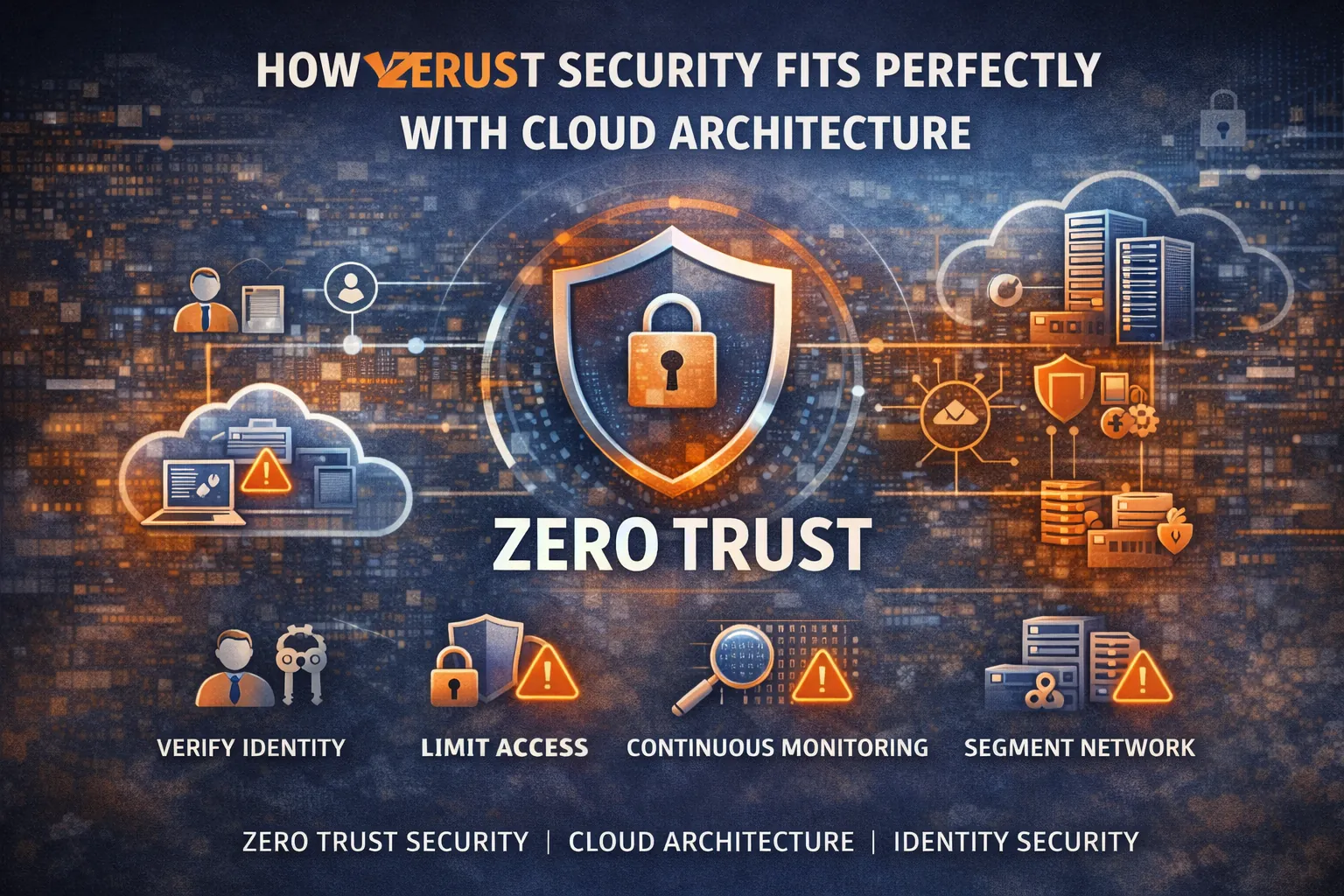
How Zero Trust Security Fits Perfectly with Cloud Architecture
Traditional perimeter-based security models are no longer effective in a cloud-first world. Users, applications, and data are no longer confined to a single network. This shift has made Zero Trust security a natural fit for modern cloud environments.
Zero Trust operates on a simple principle: never trust, always verify. Instead of assuming that anything inside the network is safe, every access request is continuously validated based on identity, device posture, location, and behavior. This approach aligns well with the distributed nature of cloud services.
Identity becomes the new perimeter in a Zero Trust model. Strong authentication, multi-factor authentication, and conditional access policies ensure that only verified users gain access to resources. Even then, access is limited to what is strictly necessary.
Cloud-native platforms provide built-in capabilities that support Zero Trust, such as identity-based access controls, micro-segmentation, and continuous logging. When combined with endpoint security and centralized monitoring, organizations gain strong visibility and control.
Zero Trust also improves resilience against breaches. If one account or workload is compromised, segmentation and least-privilege access limit the attacker’s ability to move laterally. This significantly reduces the blast radius of security incidents.
Adopting Zero Trust is not a single product implementation but a strategic shift. It requires alignment across identity, networking, endpoints, and monitoring. Organizations that embrace Zero Trust in the cloud are better equipped to handle modern threats while enabling secure remote work and digital transformation.